Nobody buys a street-level shop thinking about a home mortgage rate. Yet in Buenos Aires’s 2024–2026 cycle, that is the thread connecting both worlds. The revival of UVA mortgages reactivated home closings and, link by link, reshaped urban consumption in specific corridors — eventually reaching the smaller end of commercial real estate: the ground-floor shop, the mixed-use building, the neighbourhood strip.
Two things need stating before the chain is followed. The mortgage cycle has just turned, and most coverage is still describing the previous phase. And mortgages are not the only driver of the transaction surge — the capital amnesty accounts for a large share, which changes what the chain actually proves.
Where the mortgage cycle stands right now
The macro stabilisation from 2024 — falling monthly inflation, removal of currency controls for individuals in April 2025, greater currency predictability — reopened a channel that had been effectively dormant. Origination peaked through 2024 and much of 2025, then fell sharply.
The recent monthly path, per BCRA data, matters more than the cycle-level narrative:
| Month | Disbursed | Approx. loans | Note |
|---|---|---|---|
| April 2026 | USD 122 million | — | Widely reported as an 18-month low |
| May 2026 | USD 116 million | ~1,500 | The actual floor: shortest average term in two years, highest average rate |
| June 2026 | USD 150 million | ~1,850 | Best since March; a change of trend, but 50% below June 2025 |
This corrects a claim still in circulation. April was not the bottom — May was, and by May the market was not only smaller but structurally worse, with shorter terms and higher rates. June reversed both the volume and the direction.
The qualifier matters as much as the turn: June’s recovery leaves volume at roughly half of the same month a year earlier. This is a rebound from a low, not a return to the 2024–25 pace.
Rates, and who is actually lending
UVA rates in 2026 run from 6% to around 17% TNA, depending on the lender and the borrower’s profile. The BCRA publishes a monthly comparative list of UVA mortgage lines, which is the reference point for any current figure.
Two features of the market are usually described backwards.
Banco Nación’s dominance is far greater than commonly stated, and it is receding. According to the bank’s own account, in January 2026 it placed 96% of all new mortgages granted in the financial system, and by April it was placing 84% as competition from some large private banks revived. Figures like “three in four” understate a concentration that was close to total, and miss the more interesting fact that it is now diluting.
The state bank raised its rate while private banks cut theirs. Banco Nación charged 4.5% plus UVA before November 2025 and moved to 6% from December 2025, adjusting for funding cost and the volume of applications received in the second half of 2025. Its 6% applies to clients with a payroll account and service package; the general-market rate is 12%.
Private lenders moved the other way in March 2026: BBVA cut from 17% to 7.5% for monotributistas, Banco Corrientes from 12% to 9.9%, Banco Hipotecario from 10.5% to 9.5%, and Banco Ciudad launched a subsidised line at 7.5%. That is where the widely reported “ten-point cut” comes from — it describes specific private lenders, not a market-wide easing.
The net effect is a market whose entry point is roughly unchanged at the bottom and considerably cheaper in the middle tier — which is precisely the tier that determines how many buyers qualify.
From the closing to the neighbourhood
This is where the chain reaches property, and where it needs an honest qualifier.
Transaction activity in the City is measurably strong. March 2026 recorded 5,590 escrituras, the highest month of the year against 3,423 in January and 3,567 in February, with a total value of $902,972 million — up 46% year on year — and an average operation of $161.5 million, roughly USD 113,800 at the official rate. In that month, one in seven properties transferred in CABA was financed with a mortgage.
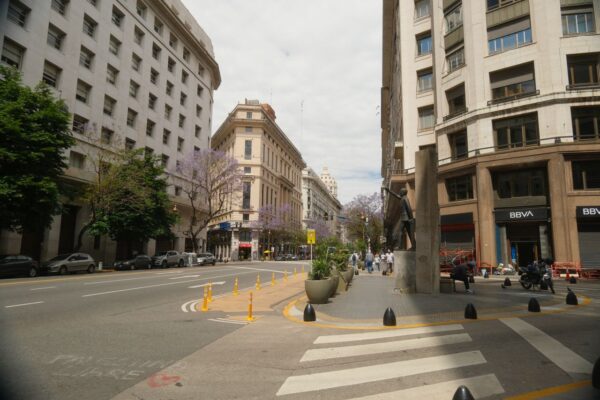
The corridors matter for anyone placing ground-floor retail. Per the Colegio Inmobiliario’s observatory, the neighbourhoods with the most escrituras have been Palermo, Belgrano, Caballito, Recoleta and Villa Urquiza — a list worth using precisely, since versions naming other neighbourhoods circulate without support.
But mortgages are not the whole explanation. In a Zonaprop survey of agencies and developers, 53% attributed the rise in transactions primarily to mortgage lending — and 39% attributed it to the capital amnesty regime. Credit accounts for roughly 15% of total purchase volume by one market estimate.
That changes what the chain proves. Mortgage origination is one of at least two significant drivers of the residential activity that eventually feeds proximity retail, and it is not the larger one in every corridor. A developer reading only the mortgage series will misattribute demand that came from repatriated capital, which behaves differently: it is lumpier, less rate-sensitive, and does not recur.
Mixed-use as the receiver
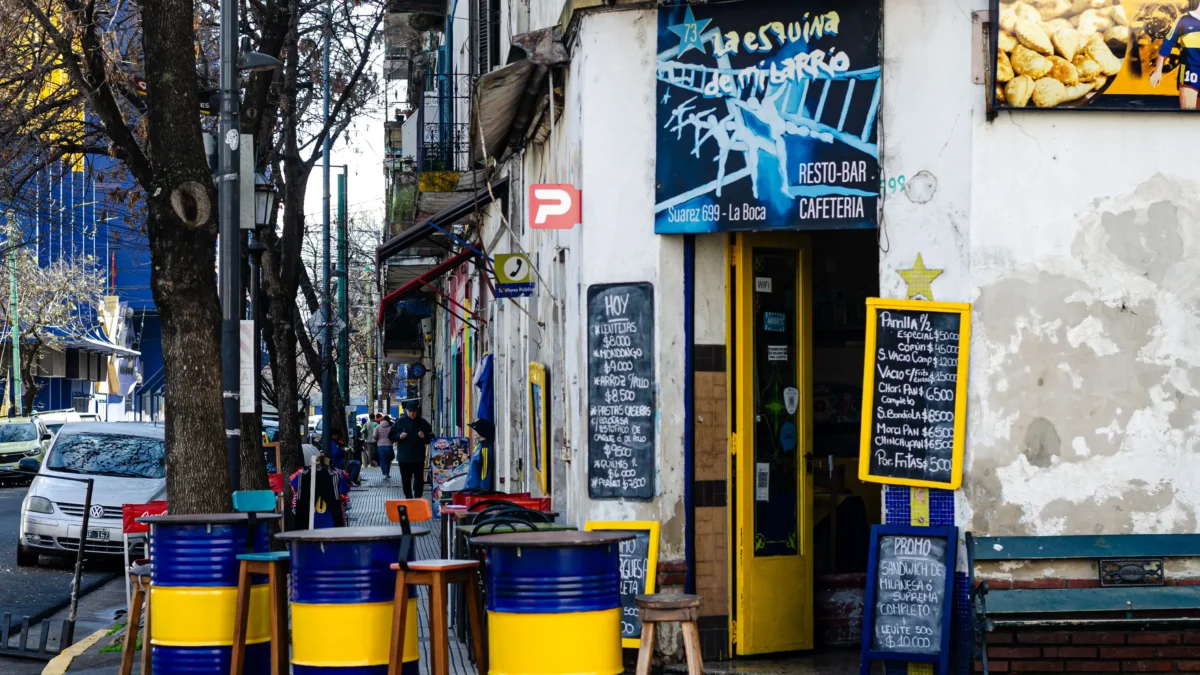
Mixed-use development — residential buildings with ground-floor commercial units — is the format most directly exposed to this cycle. When new residential units fill in a corridor, the developer who included commercial space captures proximity demand almost immediately: pharmacies, coffee shops, boutique gyms, convenience services. The logic mirrors a shopping centre’s leasing policy — anchor the foot traffic, then monetise proximity — applied at the scale of a street corner.
The ceiling on the effect is the origination pace, and that ceiling has moved twice this year. It fell through May, then lifted in June. At half of last year’s volume it remains a selective tailwind in the specific corridors where lending and amnesty capital concentrated — not a tide lifting the whole market.
For a developer, the practical implication is that corridor selection matters more than cycle timing. The volume difference between a corridor in the escrituras top five and one outside it is larger than the difference between May and June across the whole city.
What to watch through the rest of 2026
- Whether the June turn holds. One month is not a trend. July and August figures will show whether the private-bank rate cuts translated into sustained origination or a single catch-up month.
- Whether Banco Nación’s share keeps falling. Moving from 96% to 84% is meaningful; continued dilution would widen the qualifying pool more than any single rate cut.
- Whether rates hold. Argentine mortgage lending remains highly sensitive to inflation signals, and the state bank has already demonstrated it will raise when funding costs move.
- Whether the currency-band scheme stays stable. A currency shock hits buyer confidence first and, with a lag of months, the confidence of a commercial tenant evaluating a new store.
- How much amnesty capital remains deployable. Unlike mortgage credit, it is a stock rather than a flow, and its contribution to transaction volume should fade.
Conclusions
UVA mortgages do not move the Class-A office market or the large shopping centres, but they do trace an identifiable path toward the everyday end of commercial property: the street-level shop and mixed-use development.
The cycle’s current position is more favourable than most coverage suggests. May 2026 was the floor at USD 116 million, not April; June recovered to USD 150 million and roughly 1,850 loans. But volume sits at half of a year earlier, Banco Nación still places more than eight in ten new mortgages, and the transaction surge in the City owes a substantial share to the capital amnesty rather than to credit.
The signal for a mixed-use developer or proximity-retail operator is therefore narrower than a general recovery: watch the five corridors where escrituras concentrate, treat the June turn as provisional, and separate credit-driven demand from amnesty-driven demand, because only one of them recurs.
Figures were current at the time of writing. Monthly BCRA disbursement data is published with a lag and revised; the July figure may be available by the time this is read and should be checked. The total of UVA mortgages granted between January 2024 and May 2025 that circulates widely could not be confirmed against a primary source for this article. General information on commercial property markets. Not investment, tax or legal advice.