The comparison almost nobody makes. Talk of investing in Panama usually jumps straight to Panama City “in general,” as if the market were a single block. It isn’t. A retail unit in Costa del Este and a warehouse in Panamá Pacífico answer to entirely different logics of risk, liquidity and financing, and their USD yields prove it. This analysis breaks the market down by segment, with concrete figures, and explains why the territorial tax system and the economy’s full dollarisation — the balboa is worth, by law, exactly one dollar — remain the foundation on which any return in this country is built.
Why Panama competes differently: dollars, not paper balboas
The first thing a foreign investor needs to internalise is that Panama has no fiat-issuing central bank in any practical sense: the US dollar circulates as legal tender alongside the balboa, which does not exist in banknote form and has held a fixed 1:1 parity for more than a century. This removes, at the root, the currency risk that weighs on almost every other market in the region. A 7% yield in Panama is a real 7% in dollars, with no devaluation eroding the return between closing day and the day rent gets collected. For anyone comparing jurisdictions across Latin America, this feature — more than any single incentive — is what lowers the risk premium demanded of capital.
Grade-A offices: Calle 50 and Costa del Este, the corporate anchor
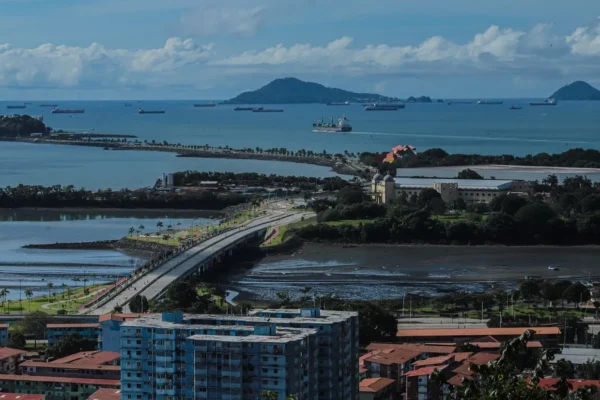
The Grade-A office corridor — Calle 50, Marbella, Obarrio and, increasingly, Costa del Este — concentrates demand from multinationals, financial firms, law offices and professional-services companies that use Panama as a regional base. Gross yields in this segment sit in a 6% to 9% range, with indicative market rents ranging from USD 18 to USD 35 per m² per month depending on building age, certifications and exact location within the corridor. Costa del Este in particular combines newer construction with a comparatively low vacancy rate against the rest of Panama City, which keeps rents firmer than in the older towers of the traditional financial district. The main risk here is not demand — solid and structural, tied to Panama’s position as a regional hub — but temporary oversupply when several new towers deliver in the same cycle.
Retail: the commercial corridors and their risk premium
The retail segment — from consolidated Malls to street-level units in high-traffic commercial corridors — offers the highest yields in the market, between 7% and 10% gross. That premium is not free: it reflects greater sensitivity to the consumption cycle, more frequent tenant turnover than offices or logistics, and typically shorter lease terms. There is meaningful heterogeneity within retail itself: a well-positioned Mall anchored by a supermarket or entertainment tenant behaves as a defensive asset, while a standalone unit on a secondary corridor carries a higher vacancy risk. For investors prioritising return over stability, retail offers the most upside; for those prioritising cash-flow predictability, it demands a finer tenant-mix analysis than any other segment in this market.
Logistics in Panamá Pacífico: the long-lease yield
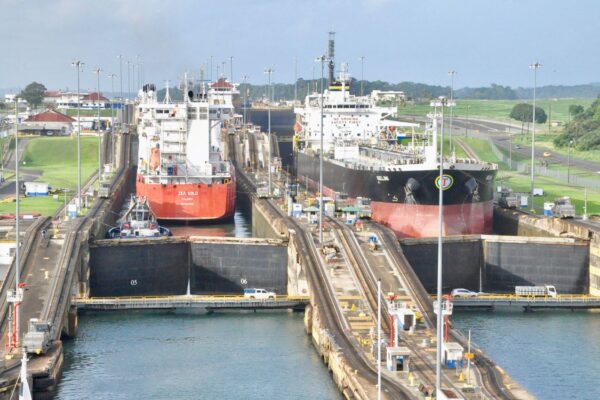
The third segment — warehouses and industrial buildings in Panamá Pacífico, the former Howard Air Base converted into a special economic zone — delivers yields of 7% to 9%, underpinned by long-term leasing contracts with logistics operators, distributors and companies tied to trade that transits the Canal. This segment’s distinguishing advantage is contract duration: while retail and office leases typically renew every 3 to 5 years, industrial buildings in Panamá Pacífico are frequently leased for 10 years or more, cutting the risk of recurring vacancy and allowing cash flow to be projected with greater certainty. The trade-off is lower resale liquidity: the universe of institutional buyers for large-format logistics assets is narrower than for offices or urban retail.
Comparative table: segment, yield and risk
| Segment | Typical location | Gross yield (USD) | Risk profile | Contract horizon |
|---|---|---|---|---|
| Grade-A offices | Calle 50 / Costa del Este | 6% – 9% | Moderate — exposed to cyclical oversupply | 3 – 5 years |
| Retail (Malls and corridors) | Costa del Este, urban corridors | 7% – 10% | Moderate-high — sensitive to consumption and tenant mix | 3 – 5 years |
| Logistics / industrial | Panamá Pacífico | 7% – 9% | Moderate — offset by long contracts, lower resale liquidity | 10+ years |
Territorial Tax System: the legal advantage behind the net return
No yield analysis for Panama is complete without the tax dimension. The country operates under a Territorial Tax System: income tax applies only to income generated within Panamanian territory, and foreign-source income falls outside the reach of the local tax authority. For the owner of a commercial property in Panama, this means tax is calculated on the asset’s local rental income, without the additional layer of taxation on global income that exists in other jurisdictions. This sits alongside a full ownership title regime (título de propiedad, registered with the Public Registry) that, across most urban areas and Panamá Pacífico, offers greater legal certainty than the right of possession (ROP) — a distinct and more limited figure that applies mainly to rural or untitled land and should be identified before making any purchase offer.
Frequently asked questions
Is gross yield the same as net return for the investor? No. Gross yield does not deduct maintenance, administration, insurance, property tax or management fees. Net return typically sits 1 to 3 percentage points below gross, depending on the segment and the quality of asset management.
Can a foreigner hold full ownership title in Panama? Yes. Across the large majority of urban areas and in Panamá Pacífico there is no meaningful restriction on foreign ownership of commercial property, always subject to the corresponding registry verification.
Why does logistics yield less than retail if the lease is longer? Because the market prices a liquidity premium: assets with fewer potential buyers and longer sale cycles theoretically demand a higher expected return; in practice, that premium in Panama is moderate given the sustained growth of Canal-linked logistics demand.
Conclusions
Panama’s commercial real estate market does not fit a single yield figure: offices, retail and logistics answer to different logics of risk, term and liquidity, and comparing by segment — not the market average — is the useful tool for a decision. Retail offers the highest yield in exchange for greater exposure to the consumption cycle; Panamá Pacífico logistics offers long contractual stability in exchange for lower resale liquidity; Grade-A offices sit in the middle, underpinned by structural demand for regional headquarters. Across all three segments, the same structural foundation operates: a dollarised economy that removes currency risk, and a territorial tax system that avoids double taxation on global income. That combination — not a single incentive or a market fad — is what keeps Panama on the radar of institutional and private capital across the region.
This article is for general information only and does not constitute legal, tax or financial advice, nor an investment recommendation. Roksolana Pyrtko Editorial is not a licensed real estate, tax or securities adviser in Panama. References to the Territorial Tax System, full ownership title and the right of possession (ROP) are general in nature; the tax and registry treatment applicable to any specific transaction depends on individual circumstances and should be verified with a professional licensed in the jurisdiction before any investment decision. Cited yields and rents are market estimates by segment, not figures attributed to any single consultancy, and may vary by exact location, asset age and financing conditions. Data reviewed 2026-07-09.